
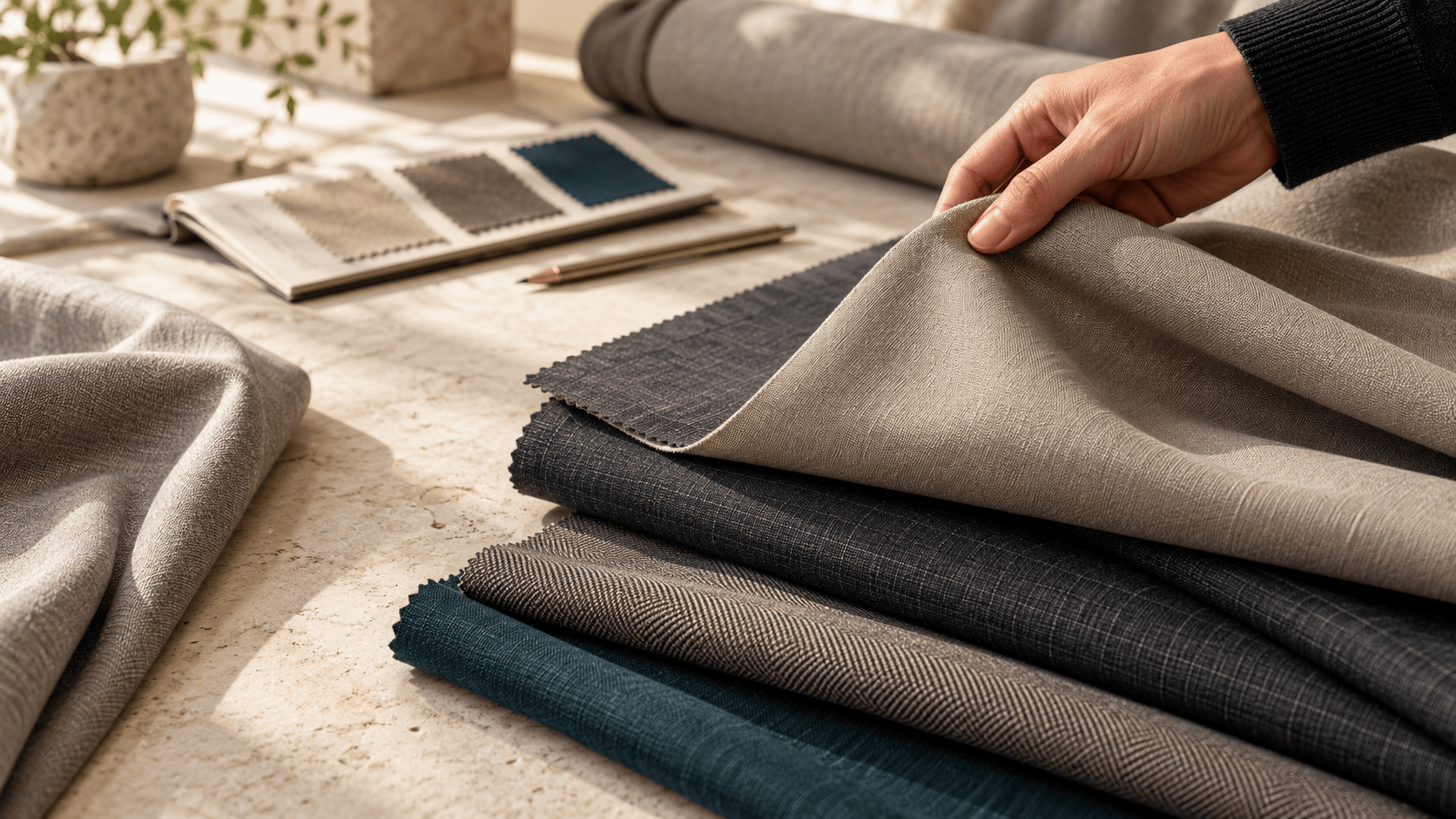
A fabric swatch can look right and still be wrong for a bulk apparel order. The color may suit the collection, but the usable width may change garment consumption. A pleasing hand feel may change after washing. A sample may also come from a different production lot than the material eventually delivered.
This fabric sourcing checklist helps apparel buyers connect each approval to a clear requirement. Use it when preparing an inquiry, reviewing samples, and confirming a bulk purchase with a fabric supplier or sourcing partner.
Start with the garment, not only the fabric name
Describe the finished garment and its intended use before asking for options. “Polyester woven fabric” leaves too many decisions open. A lightweight lined jacket, structured overshirt, and washable uniform can need very different constructions even when their fiber composition is similar.
- State the garment category, season, target market, and intended wearer.
- Describe the desired drape, opacity, surface appearance, and hand feel.
- Identify requirements such as stretch, abrasion resistance, water resistance, or easy care.
- Provide an estimated quantity by color, target budget basis, and required delivery destination.
- Separate essential requirements from preferences that can change.
If you have a reference swatch, explain what should match. You may want its texture but a lower weight, or its drape with a different composition. Label these differences so an attractive alternative is not mistaken for an exact match.
Put measurable specifications in one document
Create a specification sheet that follows the fabric through development. Record composition, construction, weight in grams per square meter, total width, usable width, color reference, and finish. Add yarn details when they are relevant and confirmed, rather than guessing them from appearance.
Agree tolerances and measurement methods before approval. A nominal weight without an acceptable range leaves room for disagreement. Likewise, a width quoted including the selvages may not provide the cutting width your factory expects.
Give each candidate a unique reference number. Connect the supplier’s article code, sample label, quotation, and later test report to that number. Keep a dated revision history when the construction, finish, or shade changes.
Understand what each sample proves
A hanger sample helps shortlist appearance and handle. A lab dip supports color evaluation. Development yardage enables sewing trials. A sample taken from bulk production helps verify the actual order. These approvals answer different questions.
Ask whether the sample represents available stock, a previous order, or a proposed development. Confirm whether its finish and construction match the quoted bulk material. Keep an approved physical reference, with the approval date and any limitations written beside it.
For color, agree the physical standard and viewing conditions. Evaluate fabric alongside relevant trims and lining. Screen images are useful for discussion, but they should not be the only basis for a production shade approval.
Test the risks that matter to the garment
Build a test plan around likely failures rather than requesting an unexplained “quality test.” Agree the method, version, sample condition, acceptance requirement, and responsible party. Ask the laboratory to confirm suitability for the material and end use.
Dimensional stability and appearance after care
For washable fabrics, evaluate length and width change using the agreed care conditions. AATCC TM135 addresses fabric dimensional changes after home laundering. It offers defined washing and drying options, so a result should identify the procedure used rather than simply say “shrinkage tested.”
Also review appearance, skew, and handle after the planned care process. Pass/fail limits should reflect the garment requirements; a test method alone does not set your brand’s acceptance threshold.
Color transfer and end-use performance
Dark fabrics worn against lighter garments deserve attention to rubbing-related color transfer. AATCC TM8 evaluates color transferred by rubbing and includes dry and wet procedures. It does not replace testing for other exposures, such as laundering or perspiration.
Discuss additional tests for the application, including seam performance, tear strength, pilling, stretch recovery, or functional finishes. Check that reports identify the relevant sample, color, and finish. A report for another article is background information, not evidence that your order passes.
Make a garment trial before bulk commitment
Send representative yardage to the garment factory. Check cutting, sewing, pressing, and the intended care process using the actual construction where practical. Review seam puckering, needle damage, seam opening, panel distortion, and compatibility with interlining or seam tape when relevant.
Record the outcome with photos and factory comments. If the fabric needs a change, confirm whether that change affects shade, hand feel, performance, price, or timing. Approve the revised material rather than assuming an earlier approval still applies.
Compare quotations on the same basis
A lower price per meter can lose its advantage if usable width is lower or cutting waste is higher. Compare equivalent specifications and calculate expected fabric cost per garment with your production team.
- Confirm currency, unit of sale, quantity tolerance, and usable width.
- Separate the minimum order per article from the minimum per color.
- Identify charges for development, testing, finishing, packing, and transport.
- Record payment terms, agreed trade terms, and the named delivery point.
- Define when the production timeline starts and which approvals it depends on.
Ask how repeat orders will be identified and whether the same construction and finish can be requested again. Avoid treating a stock quotation as a promise of future availability.
Agree bulk inspection and release requirements
Set the inspection scope before shipment. Cover roll identification, length, usable width, shade variation, visible defects, and the agreed performance checks. State who reviews exceptions and who authorizes release.
ASTM D5430 provides methods for visually inspecting and grading fabrics. It notes that different point-assignment options can produce different results. Therefore, agree the grading option and acceptance limits instead of relying on “standard inspection” as a complete instruction.
Keep approved references, reports, packing details, and written concessions together. When material arrives, check its identity and condition before cutting. A clear record makes a discrepancy easier to investigate while the rolls are still traceable.
Copy this fabric RFQ template
Garment/application: [ ]
Reference and desired changes: [ ]
Composition, weight, usable width: [ ]
Colors and quantity per color: [ ]
Required tests and limits: [ ]
Delivery destination and target date: [ ]
Please identify specification differences, minimum quantities, sample options, and quotation exclusions.
Frequently asked questions
What should I send with a first fabric inquiry?
Send the garment use, reference swatch or images, target composition and weight, quantity by color, performance needs, and destination. Mark specifications that are still open.
Is a lab dip enough to approve bulk fabric?
No. It supports a color decision. Construction, hand feel, garment behavior, and bulk consistency need their own checks.
Who should set the test requirements?
The buyer should define end-use and market requirements with its technical team. The supplier and laboratory can clarify feasible methods, sampling, and reporting.
Should every order use the same checklist?
Keep the core approval process consistent, then adjust the tests and inspection priorities for the fabric, garment, and order risk.
Discuss your next apparel fabric brief
Yuwei Textile is a Shaoxing-based apparel-fabric trading and sourcing business. Explore our fabric sourcing approach, or send your sourcing brief with your garment application, reference material, quantities, and requirements.


